Robotic Tubal Reversal vs IVF: Cost Comparison and Fertility Outcomes
Tubal ligation, commonly referred to as “getting your tubes tied,” is a form of permanent birth control that involves sealing or cutting the fallopian tubes to prevent pregnancy. While the procedure is intended to be irreversible, many women later choose to restore their fertility due to changes in life circumstances or a renewed desire to conceive naturally.
Read More
What is the Success Rate of Tubal Reversal Surgery in Burleson, TX?
Tubal reversal in Burleson, TX, while offering the possibility of natural conception, carries risks like any surgical procedure—bleeding, infection, anesthesia complications, and an increased risk of ectopic pregnancy. On average, Fort Worth–area fertility centers report that 40–85 % of women conceive within two years after reversal surgery.
Read More
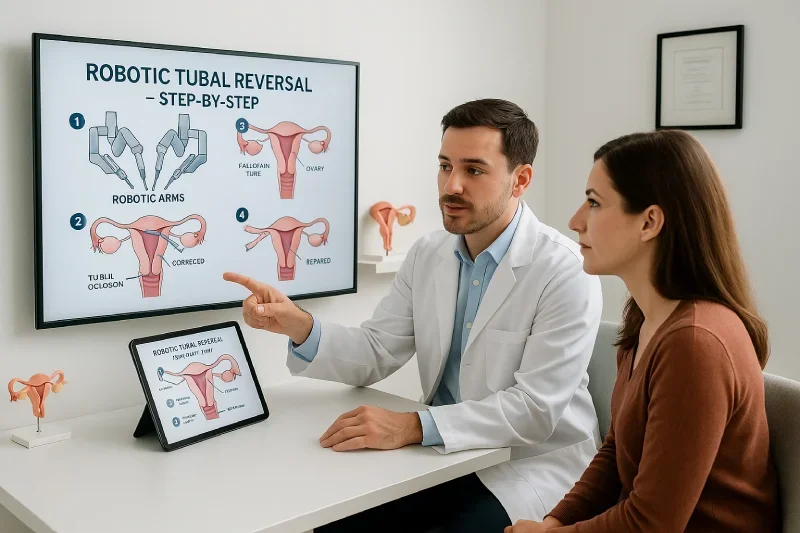
Robotic Tubal Reversal: How the Procedure Works
Tubal ligation, commonly referred to as “getting your tubes tied,” is a form of permanent birth control that involves sealing or cutting the fallopian tubes to prevent pregnancy. While the procedure is intended to be irreversible, many women later choose to restore their fertility due to changes in life circumstances or a renewed desire to conceive naturally.
Read More
What Are the Disadvantages of Tubal Reversal in Burleson, TX?
For many women and couples who previously chose tubal ligation as a form of birth control, a change in life circumstances can lead them to revisit their reproductive goals. What are the disadvantages of tubal reversal in Burleson, TX?
Read More
Robotic vs Laparoscopic Tubal Reversal: Cost Differences
Tubal reversal surgery allows women to restore fertility after undergoing tubal ligation. It is a procedure that reconnects the fallopian tubes, making natural conception possible again.
Read More
Typical Recovery Time After Robotic Tubal Reversal
Tubal reversal surgery offers hope to women who previously underwent tubal ligation (commonly known as having their "tubes tied") but have since decided they want to conceive naturally again.
Read More
Tubes Untied: Demystifying How the Procedure Works
Addressing regrets and making a decision to reverse tubal ligation is a deeply personal journey, shaped by significant life alterations and profound emotional implications. It is not uncommon for women to experience remorse subsequent to tubal ligation, and there is an escalating number of women who are considering a reversal of the procedure.
Read More
Looking Back and Moving Forward: Addressing Regrets and Deciding to Untie Tubes
You might think tubal ligation is a permanent decision, but is it really? There’s a growing trend that might surprise you: more and more women are choosing tubal ligation reversals. Let’s discuss this fascinating shift and what it could mean for you.
Read More
The Heart and Mind: Psychological Motivations for Getting Tubes Untied
The choice to reverse tubal ligation, commonly referred to as having one’s tubes untied, is often influenced by an intricate interplay of emotional and psychological factors. These may encompass an inherent yearning for parenthood, evolving family dynamics, or significant personal shifts.
Read More
A Deep Dive Into the Anatomy: the Crucial Role of Fallopian Tubes
Tubal ligation reversal, commonly referred to as having your tubes untied, is a surgical procedure that reestablishes the connection of your fallopian tubes. To simplify, this microsurgery involves the removal of the blockage from your previous tubal ligation, followed by the reattachment of the healthy segments of your tubes.
Read More
Potential Pregnancy Challenges After Tubal Ligation Reversal: What to Anticipate
Upon undergoing a tubal ligation reversal, several challenges may arise in the quest for pregnancy. Factors such as age and the health status of the fallopian tubes can have a significant influence on fertility. Irregular menstrual cycles or hormonal imbalances can impede regular ovulation and conception, adding a layer of complexity.
Read More
The Path to Motherhood: Monitoring Ovulation After Tubal Ligation Reversal
Following your tubal ligation reversal, it is crucial to meticulously track your ovulation process in order to enhance your chances of achieving conception.
Read More