For many women who have undergone tubal ligation, the desire to conceive again can become a reality thanks to advances in surgical fertility restoration.
Read More
For many women who have undergone tubal ligation, the desire to conceive again can become a reality thanks to advances in surgical fertility restoration.
Read MoreTubal ligation, commonly referred to as “getting your tubes tied,” is a form of permanent birth control that involves sealing or cutting the fallopian tubes to prevent pregnancy. While the procedure is intended to be irreversible, many women later choose to restore their fertility due to changes in life circumstances or a renewed desire to conceive naturally.
Read MoreTubal reversal in Burleson, TX, while offering the possibility of natural conception, carries risks like any surgical procedure—bleeding, infection, anesthesia complications, and an increased risk of ectopic pregnancy. On average, Fort Worth–area fertility centers report that 40–85 % of women conceive within two years after reversal surgery.
Read MoreTubal ligation, commonly referred to as “getting your tubes tied,” is a form of permanent birth control that involves sealing or cutting the fallopian tubes to prevent pregnancy. While the procedure is intended to be irreversible, many women later choose to restore their fertility due to changes in life circumstances or a renewed desire to conceive naturally.
Read MoreFor many women and couples who previously chose tubal ligation as a form of birth control, a change in life circumstances can lead them to revisit their reproductive goals. What are the disadvantages of tubal reversal in Burleson, TX?
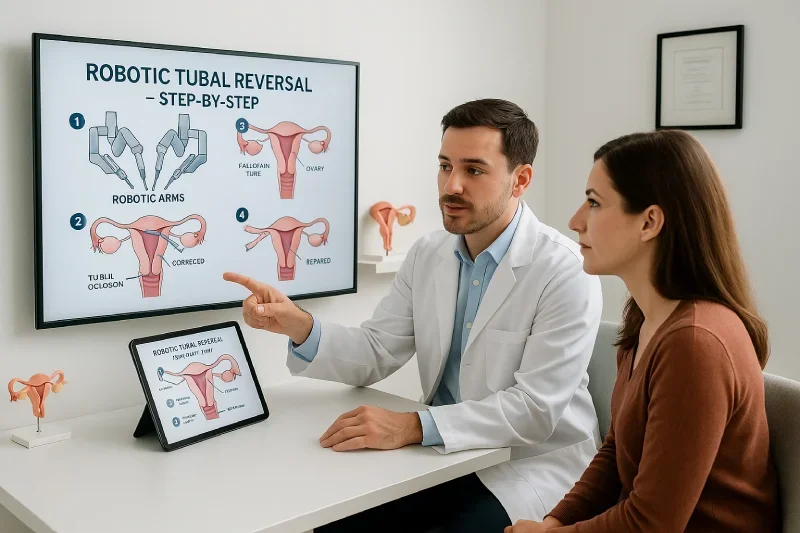
Read MoreTubal reversal surgery allows women to restore fertility after undergoing tubal ligation. It is a procedure that reconnects the fallopian tubes, making natural conception possible again.
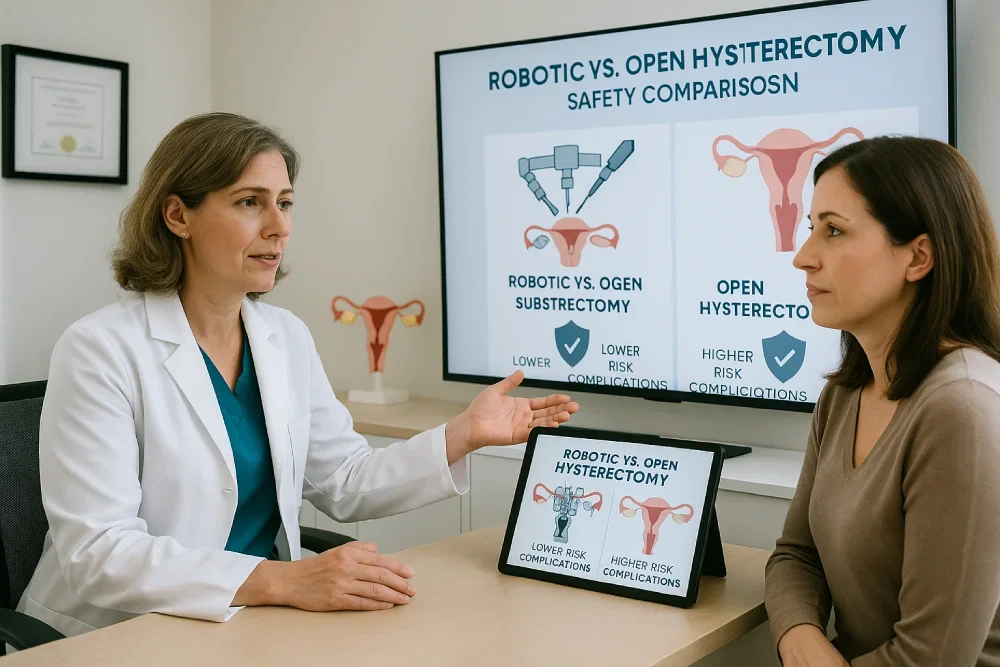
Read MoreRobotic hysterectomy is a safe and effective surgical option for many patients, including those with complex cases such as large uteri or high BMI.
Read MoreEssure is a permanent birth control method that blocks the fallopian tubes using small metal coils inserted non-surgically. While intended to be permanent, some women seek Essure reversal due to regret, complications, or the desire to restore fertility.
Read MoreEssure reversal surgery is a sophisticated way to put the tube back together after the Essure device—originally designed to be permanent—has blocked the fallopian lumen just inside the uterine cornua.
Read MoreRobotic hysterectomy is a minimally invasive surgical technique for removing the uterus that is increasingly favored for its precision, reduced recovery time, and lower complication rates compared to traditional open surgery.
Read MoreHysterectomy, the surgical removal of the uterus, is a common procedure performed for various benign and malignant conditions.
Read MoreTubal reversal surgery offers hope to women who previously underwent tubal ligation (commonly known as having their "tubes tied") but have since decided they want to conceive naturally again.
Read More