Robotic Hysterectomy for Fibroids: Recovery, Benefits, and What to Expect
Uterine fibroids affect many people, and when symptoms become severe, surgery may be recommended. Robotic hysterectomy is one of the most advanced surgical options available. This guide covers what the procedure involves, how it compares to other options, and what recovery looks like from day one to full return to normal activities.
Read More
Can I Get Pregnant 10 Years After Essure in Burleson, TX?
Wondering whether a baby might still be in your future a full decade after your Essure sterilization in Burleson, TX? The concise answer is yes—pregnancy can and does happen even 10 years after Essure placement because no contraceptive method is 100 percent fail-proof.
Read More
What is the Age Limit for Tubal Reversal in Burleson, TX
While there’s no hard-and-fast age limit for tubal reversal in Burleson, TX, real-world success data show that fertility declines steadily as birthdays accumulate. In plain English, healthy women under 35 generally see the highest pregnancy rates; however, motivated patients in their late thirties or early forties can—and do—welcome babies after tubal ligation reversal surgery every single year.
Read More
What Type of Tubal Ligation Cannot Be Reversed in Burleson, TX?
Many women in Burleson, Fort Worth, and the wider DFW area choose tubal sterilization believing it is a permanent birth control method. Later, when life changes and the desire to have children returns, they discover not every tubal ligation—or Essure procedure—can be undone. If most or all of the fallopian tube has been removed or the fimbrial end clipped away, reimplantation of tube tissue is impossible.
Read More
How Soon Can You Get Pregnant After a Tubal Reversal in Burleson, TX?
Tubal reversal offers Johnson County women a second chance at natural conception after a prior tubal ligation, but everyone wants to know, “How fast will I conceive?” National data tell us that the chance of becoming pregnant after a successful tubal reversal in a woman under age 35 is 60–80% over a two-year period.
Read More
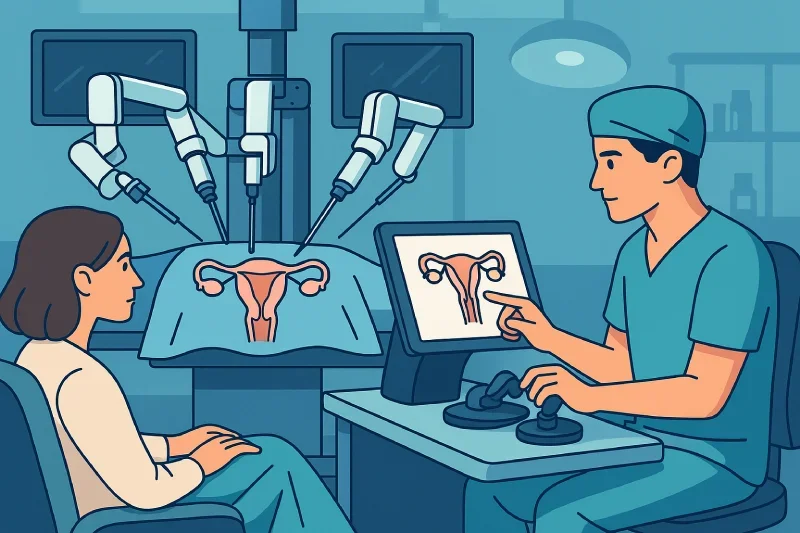
Robotic Hysterectomy Surgical Precision Explained
A hysterectomy is one of the most common surgical procedures performed in women’s health, typically used to treat conditions like fibroids, endometriosis, abnormal bleeding, or even cancer.
Read More
Robotic Hysterectomy Scar Appearance and Healing
A hysterectomy is one of the most common surgical procedures performed in women’s health, typically used to treat conditions like fibroids, endometriosis, abnormal bleeding, or even cancer.
Read More
Robotic Hysterectomy: What It Is and When It’s Needed
A hysterectomy—the surgical removal of the uterus—is one of the most commonly performed gynecologic procedures. In the past, this operation often required large abdominal incisions, extended hospital stays, and lengthy recoveries.
Read More
Robotic Tubal Reversal Success Rates: What the Studies Show
For many women who have undergone tubal ligation, the desire to conceive again can become a reality thanks to advances in surgical fertility restoration.
Read More
Robotic Tubal Reversal vs IVF: Cost Comparison and Fertility Outcomes
Tubal ligation, commonly referred to as “getting your tubes tied,” is a form of permanent birth control that involves sealing or cutting the fallopian tubes to prevent pregnancy. While the procedure is intended to be irreversible, many women later choose to restore their fertility due to changes in life circumstances or a renewed desire to conceive naturally.
Read More
What is the Success Rate of Tubal Reversal Surgery in Burleson, TX?
Tubal reversal in Burleson, TX, while offering the possibility of natural conception, carries risks like any surgical procedure—bleeding, infection, anesthesia complications, and an increased risk of ectopic pregnancy. On average, Fort Worth–area fertility centers report that 40–85 % of women conceive within two years after reversal surgery.
Read More
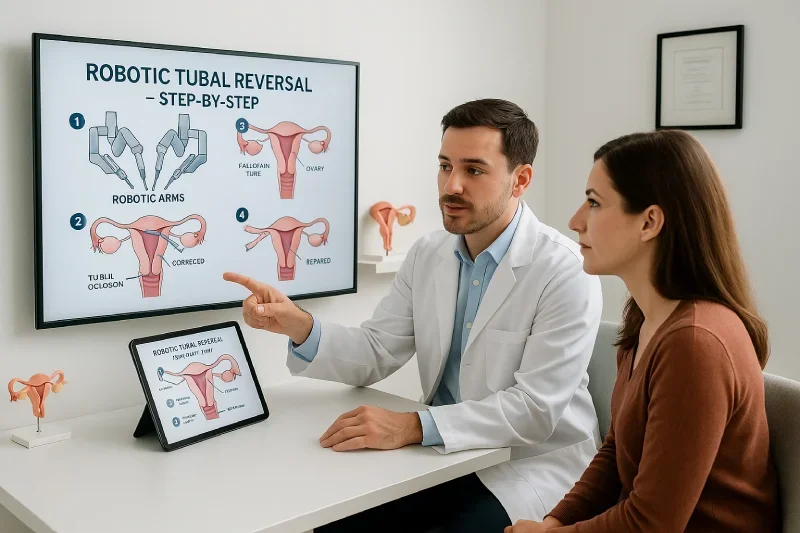
Robotic Tubal Reversal: How the Procedure Works
Tubal ligation, commonly referred to as “getting your tubes tied,” is a form of permanent birth control that involves sealing or cutting the fallopian tubes to prevent pregnancy. While the procedure is intended to be irreversible, many women later choose to restore their fertility due to changes in life circumstances or a renewed desire to conceive naturally.
Read More