Essure Reversal and Removal: What Robotic Surgery Makes Possible for Your Fertility
Categories:

By: Ethan Cole

Robotic Essure reversal involves surgically removing the Essure coils from your fallopian tubes and reconnecting the tubes to restore the pathway for natural conception. The robotic approach allows this to be done through tiny incisions with microsurgical precision — giving carefully selected patients a genuine path back to natural fertility.
If you had Essure placed and are now regretting that decision, you're not alone. Many women who initially chose Essure as a permanent sterilization option have since changed their minds — whether due to a new relationship, a change in family plans, or ongoing symptoms they believe are related to the device. The question most of them arrive at eventually is the same: is reversal actually possible?
The short answer is yes — for the right candidates. But Essure reversal is more complex than standard tubal ligation reversal, and not every surgeon performs it. Here's what robotic Essure removal and reversal actually involves, what it can and can't do, and what the recovery and fertility picture look like afterward.
What Makes Essure Reversal Different From Standard Tubal Reversal
Essure coils are placed inside the fallopian tubes — not around them — which means reversal requires removing the device from within the tube itself, then reimplanting the tube at the uterus. This is a more involved procedure than standard tubal ligation reversal and requires a surgeon with specific experience in both Essure removal and robotic microsurgery.
Standard tubal ligation cuts or blocks the tube from the outside. Reversing it means finding the two ends and suturing them back together. Essure is different — the nickel-titanium coil is inserted through the cervix and sits inside the tube, causing scar tissue to form around it and create a permanent blockage from within.
Reversing this involves two distinct surgical steps:
Step 1 — Removal: The coil and surrounding scar tissue are excised from the tube. This typically removes the segment of tube where the coil was anchored, near the uterine junction.
Step 2 — Reimplantation: The remaining healthy tube is reattached directly to the uterus (tubal reimplantation), since the coil was seated at the uterotubal junction — the point where the tube meets the uterus.
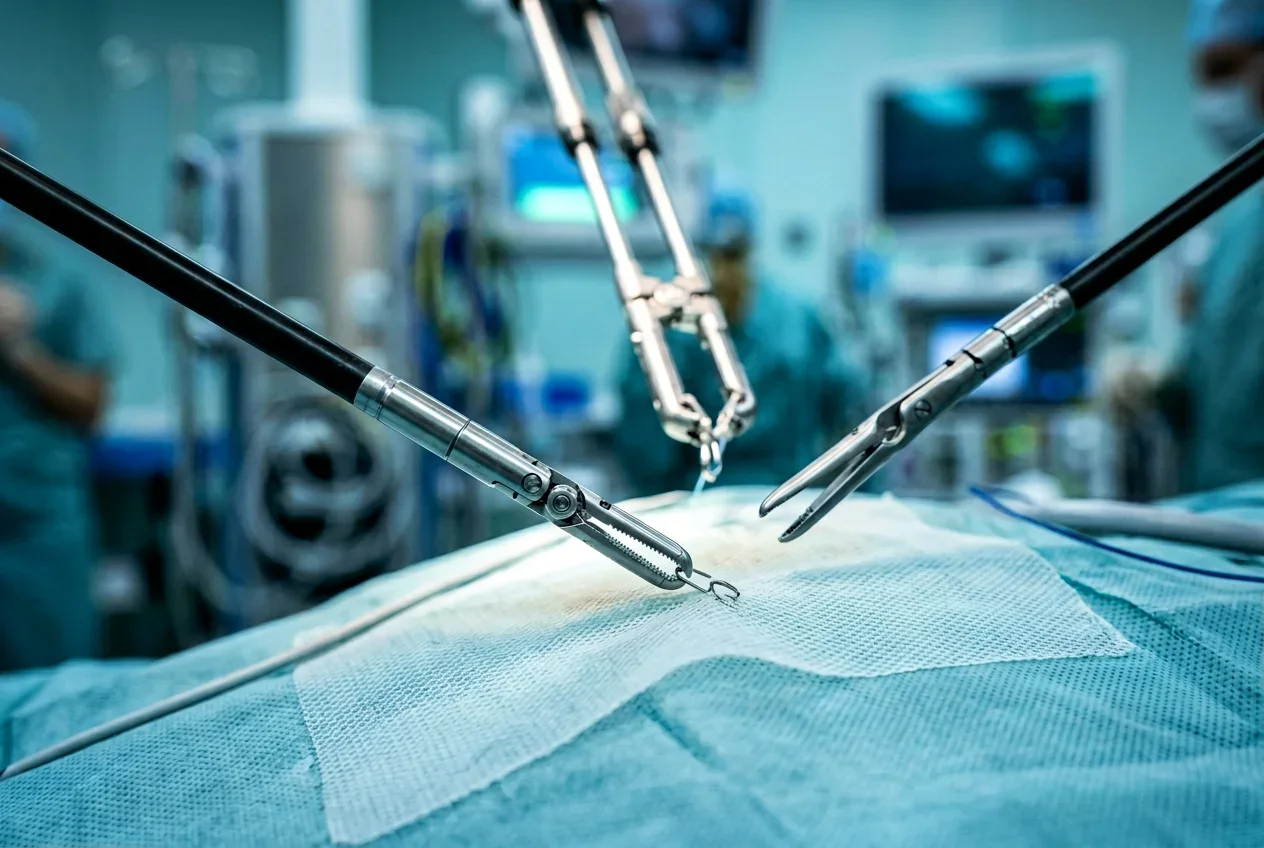
Because reimplantation involves working at the uterine wall rather than simply suturing two tube ends together, the surgical precision required is significant. This is exactly where the robotic platform earns its place — the da Vinci's 3D magnification and wristed instruments allow the surgeon to work at the uterine wall with the accuracy that this type of repair demands.
|
Factor |
Standard Tubal Reversal |
Essure Reversal |
|
Device location |
External to tube |
Inside tube at uterine junction |
|
Primary surgical step |
Reconnect cut tube ends |
Remove coil + reimplant tube at uterus |
|
Remaining tubal length |
Depends on ligation method |
Often shorter post-removal |
|
Surgical complexity |
Moderate |
Higher — involves uterine wall |
|
Surgeon experience required |
Robotic tubal surgery |
Robotic tubal + Essure-specific technique |
Who Is a Candidate for Robotic Essure Reversal
Candidacy for Essure reversal depends on remaining tubal length after coil removal, overall reproductive health, and age. Not every woman who had Essure placed is a surgical candidate — but many are, and a pre-surgical evaluation with imaging can determine your individual situation with clarity.
This is the question most women need answered before anything else. Here's what the evaluation examines:
Tubal Length and Condition
After the Essure coil and the scar tissue surrounding it are removed, there needs to be enough healthy fallopian tube remaining to reimplant at the uterus. Tubes shorter than 3–4 cm have reduced success rates. Imaging prior to surgery — typically a hysterosalpingogram (HSG) or 3D ultrasound — helps the surgeon assess what's available to work with.
Age and Ovarian Reserve
As with any fertility-restoring procedure, age is a significant factor. Women under 37 tend to have the strongest post-reversal pregnancy outcomes. For women 38 and older, a fertility evaluation including ovarian reserve testing (AMH levels, antral follicle count) helps clarify realistic expectations before committing to surgery.
Absence of Bilateral Coil Migration
A small percentage of Essure patients have coils that have migrated outside the tube. In these cases, the surgical picture is more complex and requires individual evaluation. Most patients with properly placed coils are reasonable surgical candidates.
|
Candidacy Factor |
Favorable |
Less Favorable |
|
Age |
Under 37 |
Over 40 |
|
Remaining tubal length |
4 cm or more |
Under 3 cm |
|
Coil position |
In place at uterotubal junction |
Migrated or fragmented |
|
Ovarian reserve |
Normal AMH / AFC |
Diminished |
|
Overall reproductive health |
No other fertility barriers |
Additional factors present |
Key Takeaways
Essure reversal is more complex than standard tubal reversal because the coil sits inside the tube at the uterine junction, requiring removal plus reimplantation rather than simple reconnection.
Robotic surgery is particularly well-suited to Essure reversal because the uterine wall work requires the magnification and instrument precision the da Vinci provides.
Candidacy depends on remaining tubal length, age, and coil position — a pre-surgical evaluation with imaging clarifies your individual picture.
Pregnancy rates after Essure reversal are lower than standard tubal reversal on average, reflecting the added complexity and shorter remaining tube length.
Most procedures are outpatient — patients go home the same day with a recovery timeline similar to other robotic gynecologic procedures.
IVF remains an alternative worth comparing for women whose tubal length or age makes reversal less favorable.
What the Surgery and Recovery Look Like

Robotic Essure reversal is performed under general anesthesia through 3–4 small incisions. Most patients are discharged the same day. Recovery follows a similar timeline to other robotic gynecologic procedures — light activity within 1–2 weeks, with clearance to attempt conception typically given at the 6–8 week follow-up.
Here's what the patient experience looks like from pre-op through recovery:
Before Surgery
Your pre-surgical workup will include imaging to assess coil position and tubal condition, a review of your fertility health, and standard pre-operative bloodwork. This is also the appointment where your surgeon walks through realistic expectations for your specific anatomy.
Surgery Day
The procedure takes approximately 2–3 hours. You'll arrive at the surgical facility, go through standard pre-op preparation, and be under general anesthesia for the duration. The robotic system is used to remove the coils, excise scar tissue, and perform the reimplantation. You'll recover in the facility for a few hours post-procedure before going home.
Recovery Timeline
Days 1–3: Rest. Mild to moderate discomfort managed with over-the-counter medication for most patients. Some bloating or shoulder discomfort from surgical gas, resolving within 48–72 hours.
Week 1–2: Light activity. Most desk-work patients return within this window. No heavy lifting or strenuous activity.
Week 2–4: Gradual return to full normal activity as comfort allows.
Week 6–8: Follow-up appointment with imaging to confirm tubal patency and surgical healing. Clearance to begin trying to conceive if healing is on track.
|
Recovery Milestone |
Typical Timeframe |
|
Discharge from surgical facility |
Same day |
|
Return to desk work / light activity |
1–2 weeks |
|
Return to full physical activity |
3–4 weeks |
|
Follow-up imaging appointment |
6–8 weeks |
|
Cleared to attempt conception |
6–8 weeks post-op |
Conclusion
Essure reversal isn't the right answer for every woman who's had the device placed — but for carefully selected candidates, robotic surgery has made it a genuine option rather than a long shot. The precision the da Vinci system brings to the uterine reimplantation step is a meaningful part of what makes modern Essure reversal viable.
If you've been carrying this question for a while and want a real answer about your individual candidacy, the first step is a consultation with a surgeon who performs these procedures regularly. Dr. Neef's office serves patients throughout the DFW area —contact us to schedule your evaluation and get a clear picture of what's possible for you.
Ready to find out if Essure reversal is right for you? Contact Dr. Neef's office to schedule your consultation.
Call (817) 568-8731Categories:


Frequently Asked Questions
-
Not exactly. Essure removal refers to taking out the coils — sometimes done for symptom relief without the goal of restoring fertility. Essure reversal combines removal with tubal reimplantation specifically to restore the pathway for natural conception.
-
Standard tubal reversal reconnects two cut tube ends. Essure reversal requires removing the coil from inside the tube and reimplanting the remaining tube directly at the uterus — a more complex procedure requiring specific surgical experience and precision.
-
Clinical data shows pregnancy rates generally in the 38–66% range depending on patient age, tubal length, and overall fertility health. These rates are somewhat lower than standard tubal reversal, reflecting the added complexity and typically shorter remaining tubal length.
-
Pre-surgical imaging — typically an HSG or 3D ultrasound — helps assess how much healthy tube remains after coil removal. Your surgeon will review this imaging during your consultation and give you a direct assessment of your candidacy.
-
Coil migration complicates the surgical picture and requires individual evaluation. Some cases of mild migration can still be addressed surgically; others may not be suitable for reversal. Your surgeon will review imaging to determine what's possible for your specific situation.
-
IVF is the primary alternative for women who aren't surgical candidates — either due to insufficient tubal length, age, or additional fertility factors. A consultation can help you understand both paths and which makes more sense for your situation.
-
Yes. Most patients are discharged the same day. The robotic approach's minimal incision size and reduced tissue trauma support same-day recovery rather than overnight stays.
-
Most surgeons give clearance to begin attempting pregnancy at the 6–8 week post-operative follow-up, once imaging confirms tubal healing and patency.
-
Ectopic pregnancy is a known risk after any tubal surgery. Rates after Essure reversal are generally cited in the 4–9% range. Early pregnancy confirmation with your OB is important to rule out ectopic implantation.
-
Coverage varies significantly by plan. Many insurers classify tubal reversal procedures as elective, which affects coverage. Contact your insurance provider directly, and ask Dr. Neef's office about financing options if needed.