What Robotic Tubal Reversal Really Means for Your Fertility: A Patient's Perspective
Categories:

By: Ethan Cole

Robotic tubal reversal restores your ability to conceive naturally by reconnecting the fallopian tubes that were previously tied or cut. For many women, the procedure translates to a real, renewed shot at pregnancy — without the ongoing cycles and costs of IVF. But understanding what the surgery actually changes (and what it doesn't) is what helps you make the right call for your family.
Deciding to pursue a tubal reversal is rarely a simple decision. You've likely spent hours researching, second-guessing, and wondering whether it's even worth trying. If you're looking for a straight answer about what robotic tubal reversal surgery actually does for your fertility — not the clinical overview, but the real-world, patient-level picture — this is for you.
There's a lot of information out there about the procedure itself. What's harder to find is an honest breakdown of what changes after surgery, what realistic expectations look like, and how the robotic approach specifically affects your outcome. That's what we're covering here.
What Actually Changes in Your Body After Tubal Reversal
After robotic tubal reversal, your fallopian tubes are reconnected so eggs can once again travel from your ovaries to your uterus — and sperm can reach them. The surgery doesn't alter your hormone levels, your ovarian reserve, or your menstrual cycle. What it restores is the physical pathway for natural conception.
It helps to understand what tubal ligation did in the first place. Whether your tubes were cut, tied, clamped, or burned, the goal was the same: interrupt the path between egg and sperm. Reversal surgery undoes that interruption by removing the damaged tubal segments and carefully suturing the healthy ends back together.
Here's what changes post-surgery:
The mechanical pathway reopens. Eggs can travel through your tubes again, and sperm can meet them.
Natural conception becomes possible again. You don't need fertility medications or timed procedures to get pregnant.
Your cycle doesn't change. Ovulation continues on its normal schedule — the surgery doesn't affect hormones.
Your body heals the reconnection over several weeks. Full tubal function is typically restored within 6–8 weeks.
What doesn't change: your ovarian reserve, your egg quality, your uterine health, or any pre-existing fertility factors. Tubal reversal addresses one specific barrier. If other factors are at play, they'll still need to be evaluated.
|
Before Reversal |
After Reversal |
|
Fallopian tubes blocked or disconnected |
Tubes reconnected and functional |
|
Natural conception not possible |
Natural conception possible again |
|
No pathway for sperm-egg contact |
Pathway restored through repaired tube |
|
Fertility unaffected except for tubal barrier |
All other fertility factors remain the same |
|
IVF required to achieve pregnancy |
Natural pregnancy attempts can begin |
Why the Robotic Approach Makes a Difference at the Patient Level
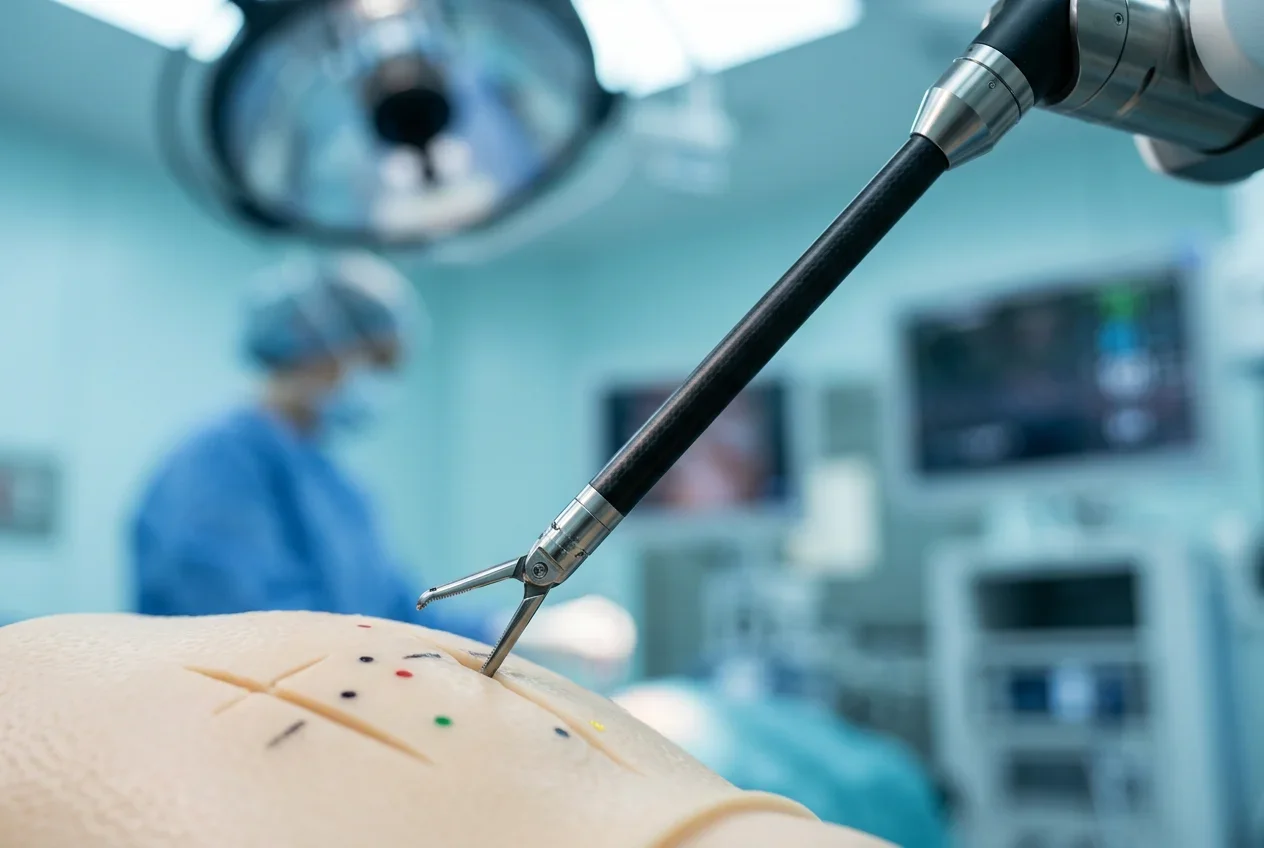
Robotic tubal reversal uses the da Vinci Surgical System to perform microsurgery through a few small incisions rather than a large abdominal opening. For patients, this means less trauma to surrounding tissue, a shorter recovery, and — critically — the kind of surgical precision that matters when you're working with structures as delicate as fallopian tubes.
The tubes themselves are roughly the diameter of a pencil lead. Reconnecting them successfully requires sutures finer than a human hair, applied with zero margin for error. This is where the robotic system earns its place.
What Robotic Precision Means for Your Results
Traditional open surgery requires a 4–6 inch abdominal incision to give the surgeon access and visibility. Even laparoscopic approaches have limitations in dexterity at the microscopic scale required for tubal work. The da Vinci Surgical System gives the surgeon 10x magnified, three-dimensional vision and instruments that move with greater range and steadiness than the human hand alone.
For you as a patient, this translates to:
Cleaner suture lines that support proper healing and tubal patency
Less collateral tissue damage around the repair site
Smaller incisions (typically 3–4 tiny entry points versus an open cut)
Faster return to normal activity — most patients resume light activity within 1–2 weeks
Lower infection risk associated with minimally invasive technique
Recovery Looks Different Too
Open tubal reversal has historically required a 2–3 day hospital stay and a 4–6 week full recovery. With robotic surgery, most patients go home the same day and are back to desk work within a week. That's not a small difference — it affects everything from childcare logistics to time off work.
|
Surgical Approach |
Incision Size |
Hospital Stay |
Return to Light Activity |
Return to Full Activity |
|
Open (mini-laparotomy) |
4–6 inches |
1–3 days |
4–6 weeks |
6–8 weeks |
|
Standard laparoscopic |
2–3 small ports |
Same day or 1 night |
2–3 weeks |
4–6 weeks |
|
Robotic (da Vinci) |
3–4 tiny ports |
Same day |
1–2 weeks |
3–4 weeks |
Key Takeaways
Tubal reversal restores the physical pathway for conception — it doesn't alter hormones, ovulation, or ovarian reserve. Other fertility factors remain unchanged.
Robotic surgery uses smaller incisions and greater precision than traditional open surgery, which supports better tissue healing at the repair site.
Most patients go home the same day after robotic tubal reversal and can return to light activity within 1–2 weeks.
Pregnancy can typically be attempted 6–8 weeks post-surgery, once the tubes have healed and reconnection is confirmed.
Age is the single biggest predictor of success — women under 37 tend to have the strongest outcomes after reversal surgery.
Tubal length remaining after ligation matters significantly. Surgeons need adequate healthy tube to work with; the more that remains, the better the reconnection.
What Your Chances of Pregnancy Actually Look Like

Pregnancy rates after robotic tubal reversal vary based on age, the type of original ligation, remaining tubal length, and overall fertility health. Studies consistently show that carefully selected candidates — particularly women under 37 — can expect pregnancy rates that compare favorably to IVF, often without the repeated cycles and associated costs.
This is where a lot of online information gets vague, so let's be direct about the factors at play.
Age Is the Dominant Factor
Research consistently identifies age as the strongest predictor of post-reversal pregnancy success. This isn't about the surgery itself — it reflects egg quality and ovarian reserve, which naturally decline with age. General patterns from clinical data:
Under 35: Strongest outcomes, with many studies reporting pregnancy rates in the 65–80% range over 24 months
35–37: Still strong candidacy; outcomes vary more based on tubal condition and overall fertility health
38–40: Success is possible but more variable; a fertility evaluation helps clarify individual chances
Over 40: IVF may offer a more predictable path for some patients, though reversal remains an option in select cases
The Type of Ligation Matters
Not all sterilization methods leave the same amount of healthy tube to work with. Clips and rings typically preserve more tubal length than burning (cauterization) or complete removal. Your surgeon will assess remaining tubal length during a pre-surgical evaluation — tubes shorter than 4 cm have lower reconnection success rates.
|
Ligation Method |
Tubal Tissue Preserved |
Reversal Candidacy |
|
Falope rings / clips |
High |
Generally strong |
|
Cauterization (partial) |
Moderate |
Depends on extent |
|
Cauterization (extensive) |
Low |
More limited |
|
Salpingectomy (complete removal) |
None |
Not reversible |
|
Essure coils |
Variable |
Requires specialized evaluation |
What to Expect in the Months After Surgery
Most patients attempt pregnancy beginning 6–8 weeks after robotic tubal reversal, once surgical follow-up confirms tubal healing. The process from that point is natural — there are no fertility medications, no timed IUI cycles, and no laboratory involvement unless a secondary issue arises.
Recovery from the surgery itself is straightforward for most patients. Mild discomfort for the first several days, managed with over-the-counter pain relief. A small number of patients experience bloating or shoulder discomfort from the surgical gas used during the procedure, which resolves within 48–72 hours.
Your follow-up appointment will typically include imaging to confirm tubal patency — that both repaired tubes are open and functional. From there, the path is natural conception on your own timeline.
Here's what that post-surgery window typically looks like:
Week 1–2: Rest, light activity only, no heavy lifting
Week 2–4: Gradual return to normal activity; most patients back to work by week 2 for desk-based roles
Week 6–8: Follow-up imaging and clearance to begin trying to conceive
Months 3–6: The most active conception window — tubes are fully healed and fertility is at its best
Months 6–24: Continued natural attempts; many pregnancies occur in this range for candidates with good tubal health
Sound familiar as a timeline? It mirrors natural conception patterns for women in their mid-30s — no shortcuts, but no unnecessary intervention either.
Conclusion
Robotic tubal reversal doesn't guarantee pregnancy — no procedure does. What it does is remove the surgical barrier between you and natural conception, restore your body's own fertility pathway, and do so with the precision and recovery advantages that robotic surgery makes possible. For the right candidate, that's a meaningful difference.
Whether reversal is the right path for you depends on your age, tubal condition, and broader fertility picture. The best starting point is a consultation with a surgeon who performs these procedures regularly and can evaluate your specific anatomy. If you're in the DFW area and ready to explore whether you're a candidate,contact Dr. Neef's office to schedule your evaluation.
Schedule your tubal reversal consultation today. Ready to find out if you're a candidate? Contact Dr. Neef.
Call (817) 568-8731Categories:


Frequently Asked Questions
-
Most surgeons clear patients to begin trying 6–8 weeks post-surgery, after a follow-up confirms tubal healing and patency. There's no benefit to waiting longer than your surgeon recommends once you've received clearance.
-
No. The surgery reconnects the fallopian tubes but doesn't interact with your ovaries, hormone production, or menstrual cycle. Ovulation continues normally before and after surgery.
-
Age is consistently the strongest predictor of post-reversal pregnancy success, followed by tubal length remaining after the original ligation. Women under 37 with adequate tubal length tend to have the strongest outcomes.
-
Yes. Most robotic tubal reversal procedures are outpatient — patients go home the same day. Hospital stays are rarely required with the minimally invasive robotic approach.
-
No. Clip and ring ligations are the most reversible. Extensive cauterization or complete tube removal (salpingectomy) leaves insufficient tubal tissue for reconnection. Your surgeon will evaluate remaining tubal length before recommending surgery.
-
The procedure typically takes 2–3 hours from start to finish, depending on the extent of the original ligation and the surgeon's technique. Recovery in the surgical facility adds a few hours before discharge.
-
Both are minimally invasive, but robotic surgery provides the surgeon with 10x magnified 3D vision and greater instrument precision — advantages that matter when suturing structures as fine as fallopian tubes.
-
Not as a standard part of the process. Reversal restores natural conception ability. Fertility medications are only considered if secondary issues arise, such as irregular ovulation or if pregnancy hasn't occurred after an extended natural attempt period.
-
Yes. Ectopic pregnancy is a known risk after any tubal surgery, estimated at roughly 4–9% of post-reversal pregnancies. Early pregnancy confirmation with your OB is important to rule out ectopic implantation.
-
A pre-surgical evaluation with your surgeon will assess tubal length remaining, your age, overall reproductive health, and whether your specific ligation method is reversible. Most patients know their candidacy status after a single consultation.