Robotic Tubal Reversal: The Complete Guide to Restoring Your Fertility
Categories:

By: Ethan Cole

Robotic tubal reversal is a minimally invasive procedure that reconnects your fallopian tubes after a tubal ligation, restoring your ability to get pregnant naturally. Using the Da Vinci surgical system, a trained robotic surgeon can reverse most types of tubal sterilization through tiny incisions — with recovery in about a week and pregnancy success rates reaching 70% or higher for women under 35.
If you had your tubes tied and now want to grow your family, you're not alone. Thousands of women each year explore robotic tubal reversal surgery as a path back to natural fertility. The good news? Modern robotic technology has made this procedure safer, more precise, and more accessible than ever before.
This guide walks you through everything — from how the procedure works and who qualifies, to what recovery looks like and what kind of pregnancy success you can realistically expect. Whether you're just starting to research or you're ready to schedule a consultation, you'll find the answers here.
What Is Robotic Tubal Reversal and How Does It Work?
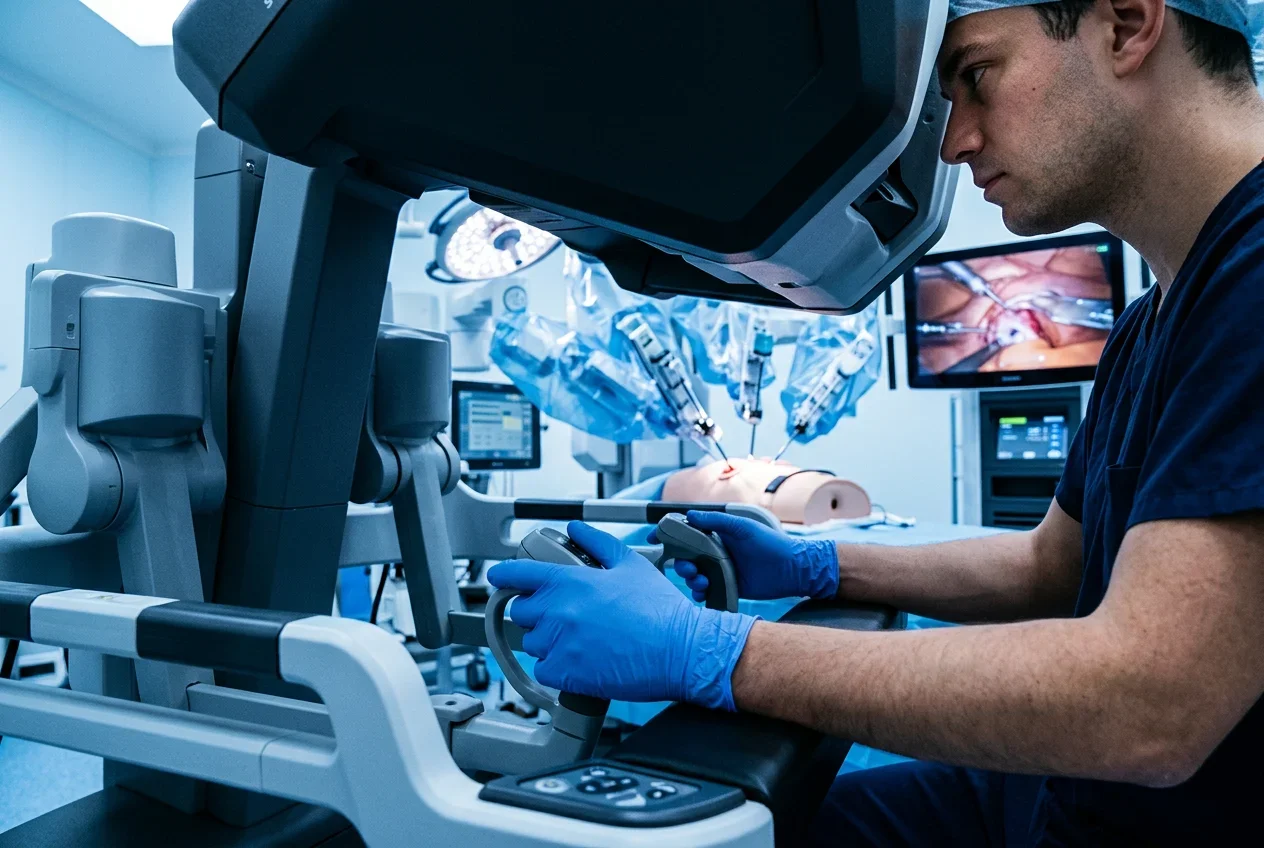
Robotic tubal reversal (tubal reanastomosis) uses the Da Vinci surgical system to reconnect the separated segments of your fallopian tubes through small laparoscopic incisions. The surgeon controls robotic arms from a console, achieving microscopic precision that the human hand alone can't replicate — resulting in better fertility outcomes and faster healing.
The procedure itself is straightforward in concept, even though the surgical technique behind it is highly specialized. During a tubal ligation, your fallopian tubes were cut, clipped, banded, or cauterized to prevent eggs from reaching the uterus. A robotic tubal ligation reversal removes the damaged segments and carefully reconnects the healthy portions using microsurgical sutures thinner than a human hair.
Here's what makes the robotic approach different from traditional open surgery. Your surgeon sits at a computerized console just a few feet from you. From there, they control three or four robotic arms that hold miniaturized surgical instruments and a high-definition 3D camera. The system translates the surgeon's hand movements into ultra-precise micro-movements inside your body — with built-in tremor filtration and motion scaling that simply aren't possible during manual surgery.
The Da Vinci platform gives your surgeon the ability to zoom in on the fallopian tube tissue at magnification levels that enhance accuracy during the reconnection. Computer-controlled scaling means even the smallest adjustments are smooth and deliberate. This matters because the more carefully the tubes are reconnected — and the more healthy tube length is preserved — the better your chances of achieving pregnancy afterward.
|
Feature |
Robotic Tubal Reversal |
Traditional Open Surgery |
Standard Laparoscopy |
|
Incision Size |
4-5 tiny incisions (5-12mm) |
4-6 inch abdominal incision |
3-4 small incisions |
|
Visualization |
3D high-definition, magnified |
Direct line of sight |
2D camera view |
|
Surgical Precision |
Robotic micro-movements with tremor filtration |
Manual hand movements |
Manual with long instruments |
|
Recovery Time |
~1 week |
4-6 weeks |
2-3 weeks |
|
Typical Hospital Stay |
Same day or overnight |
2-3 days |
Same day or overnight |
Most tubal reversal surgery takes between one and two hours. You'll have four to five small incisions on your abdomen, each closed with dissolvable stitches. Many patients go home the same day or the following morning.
Who Is a Good Candidate for Tubal Ligation Reversal?
The best candidates for robotic tubal ligation reversal are women under 40 with sufficient remaining fallopian tube length, a healthy reproductive system, and a partner with a normal sperm count. Your original ligation method also matters — clip and band methods generally have the highest reversal success rates.
Not every woman who had her tubes tied is automatically a candidate, but the majority are. Dr. Jason Neef, MD, evaluates several key factors during your preoperative consultation to determine whether reversal is right for you. Understanding these factors ahead of time helps you walk into that appointment informed and prepared.
Age is one of the most significant variables. Women under 35 have the highest pregnancy rates after tubes untied procedures — roughly 70%. Success rates gradually decrease with age, dropping to approximately 30% for women in their early 40s. That doesn't mean reversal isn't worth exploring if you're over 35, but it does mean expectations should be set realistically based on your individual situation.
Your original sterilization method plays a major role too. Tubal clips (like the Hulka or Filshie clip) and silastic bands cause the least amount of tube damage, making them the easiest to reverse with the highest success rates. Cauterization methods — particularly monopolar coagulation — can damage more of the tube, which reduces the length available for reconnection. And if you had a salpingectomy (complete tube removal), reversal typically isn't possible.
The length of your remaining fallopian tubes after reconnection is critical. Women with at least four inches of healthy tube after the reversal procedure have the best pregnancy outcomes. Your surgeon can estimate this from your original surgical and pathology reports.
|
Candidacy Factor |
Favorable |
Less Favorable |
Not a Candidate |
|
Age |
Under 35 |
35-42 |
Over 43 (case-by-case) |
|
Ligation Method |
Clips, bands, Pomeroy |
Bipolar cauterization |
Salpingectomy |
|
Remaining Tube Length |
4+ inches per side |
2-4 inches per side |
Under 2 inches |
|
Overall Health |
No major pelvic issues |
Prior pelvic surgery |
Severe pelvic adhesions |
|
Partner Fertility |
Normal sperm analysis |
Mildly reduced count |
Severe male factor infertility |
A preoperative consultation with Dr. Neef includes a physical exam, pelvic ultrasound, and bloodwork — along with a thorough review of your surgical history and partner's fertility. This is where you'll get an honest, personalized assessment of your likelihood of success.
Robotic Tubal Reversal vs IVF: Making the Right Choice

For many women, robotic tubal reversal offers a more cost-effective path to pregnancy than IVF — especially if you want more than one child. Reversal restores your natural fertility for multiple pregnancy attempts, while each IVF cycle is a separate investment with its own success rate.
This is one of the biggest decisions you'll face after deciding you want to get pregnant again. Both options work, but they work very differently — and the right choice depends on your age, health, financial situation, and how many children you hope to have.
Here's the thing most people don't realize: a tubal reversal surgeon can restore your natural fertility in a single procedure. Once your tubes are reconnected and patent, you can try to conceive naturally every month without additional medical intervention. That means regular intercourse, in time, should lead to pregnancy. Compare that to IVF, where each cycle requires hormone injections, egg retrieval, embryo transfer, and significant clinic involvement — and each attempt is a separate cost.
According to the American Society for Reproductive Medicine (ASRM), the cumulative pregnancy rate after tubal reversal can exceed IVF success rates over multiple years, particularly for younger women. The advantage multiplies if you want two or three children, because each subsequent pregnancy after reversal doesn't require another procedure — just time and patience.
That said, IVF may be the better option if you're over 40, have very short remaining tubes, or if there are additional fertility factors like severe endometriosis or significant male factor infertility. There's no one-size-fits-all answer.
|
Comparison Factor |
Robotic Tubal Reversal |
IVF |
|
How It Works |
One-time surgery restores natural fertility |
Per-cycle medical procedure |
|
Multiple Pregnancies |
Possible without repeat procedures |
Each pregnancy requires a new cycle |
|
Typical Per-Attempt Cost |
One surgical fee covers all future attempts |
Per-cycle fee each time |
|
Best Candidates |
Under 40, good tube length, no other fertility issues |
Over 40, short tubes, or additional infertility factors |
|
Recovery |
~1 week surgical recovery |
Hormonal side effects per cycle |
|
Conception Method |
Natural intercourse |
Clinical embryo transfer |
The biggest advantage of robotic tubal ligation reversal is that once the surgery is done, you're back to trying naturally. No medications, no clinic appointments, no per-cycle fees. For women who qualify, that's a powerful benefit both emotionally and financially.
Key Takeaways
Robotic tubal reversal reconnects your fallopian tubes through tiny incisions using Da Vinci technology, with about a one-week recovery — far shorter than traditional open surgery.
Most ligation methods are reversible, with clips and bands offering the highest success rates. Your surgeon evaluates tube length, age, and overall health during consultation.
Pregnancy success rates reach approximately 70% for women under 35, with outcomes varying by age and original sterilization method.
Reversal can be more cost-effective than IVF for women wanting multiple children, since one surgery restores ongoing natural fertility.
The Da Vinci surgical system provides microsurgical precision through 3D magnification and robotic micro-movements that preserve maximum tube length.
A preoperative consultation with review of surgical records, ultrasound, and bloodwork determines your personalized candidacy and expected outcomes.
What Does Recovery Look Like After Robotic Tubal Reversal?
Most women recover from robotic tubal reversal within one week — compared to four to six weeks for open surgery. You'll have small incisions closed with dissolvable stitches, manageable pain controlled with over-the-counter medications, and can typically return to light daily activities within a few days.
Recovery is one of the areas where the robotic approach really separates itself from the older open surgical method. Because your surgeon works through tiny 5-12mm incisions instead of a large abdominal cut, there's dramatically less tissue trauma, less blood loss, and less post-operative pain.
Here's what the first week typically looks like. Day one and two are the most uncomfortable — you'll feel sore around the incision sites and may experience some bloating from the gas used during laparoscopy. Most patients manage this with NSAIDs like ibuprofen or naproxen and a heating pad. Dr. Neef provides a prescription for pain medicine, but many patients find they only need it for the first 48-72 hours.
By day three or four, most women are moving around the house comfortably and eating normally. Light activity is encouraged — walking helps your body heal and reduces the risk of blood clots. Heavy lifting, strenuous exercise, and sexual activity should wait until your surgeon clears you, which is usually at your follow-up appointment.
The small incisions heal quickly. You may notice a small amount of clear or slightly blood-tinged fluid from the incision sites — that's normal. If you see anything that looks like pus, experience fever above 100.4°F, or can't eat, drink, or use the bathroom, contact Dr. Neef's office right away.
One of the major financial benefits patients overlook: with a one-week recovery versus six weeks for open surgery, you're back at work five weeks sooner. That's five additional weeks of income and five fewer weeks away from your family and daily routine.
After your follow-up confirms everything healed properly, you can begin trying to conceive. There's no mandatory waiting period beyond your surgeon's clearance — many couples start trying within a few weeks of surgery.
Ready to explore robotic tubal reversal? Call Dr. Neef today. Schedule your consultation now — take the first step toward growing your family.
Call (817) 568-8731Categories:



Frequently Asked Questions
-
Most types can be reversed, including clips, bands, Pomeroy (cut, tied, and burned), bipolar cauterization, and Irving procedures. Salpingectomy — where the entire tube was removed — typically cannot be reversed. Your surgical and pathology reports help determine your specific reversibility.
-
The procedure usually takes one to two hours. You'll be under general anesthesia, and most patients go home the same day or the following morning after an overnight observation at Texas Health Huguley Hospital in Burleson, TX.
-
Significantly less painful. The incisions are only 5-12mm compared to a 4-6 inch cut for open surgery. Most patients manage pain with over-the-counter NSAIDs after the first couple of days and only use prescription pain medication briefly.
-
Success rates are approximately 70% for women under 35. Rates decrease with age — roughly 50% for women 35-39 and about 30% for women in their early 40s. Ligation method and remaining tube length also affect outcomes.
-
Most patients can begin trying to conceive within two to four weeks after surgery, once their surgeon confirms healing is progressing well. There's no extended mandatory waiting period.
-
Item descriptionMost insurance plans do not cover tubal reversal because it's considered an elective procedure. However, financing options and payment plans are available. Contact Dr. Neef's office for specific cost information and financing guidance.
-
There is an increased risk of ectopic pregnancy after any tubal surgery. Careful early-pregnancy monitoring helps detect ectopic pregnancies quickly, reducing potential complications. Your surgeon will discuss monitoring protocols during your consultation.
-
Yes. Dr. Neef evaluates and repairs both fallopian tubes during a single robotic procedure. Having two functional tubes increases your monthly chances of conception compared to having only one open tube.
-
Your original surgical report and pathology report provide estimates of how much tube was removed. During your consultation, Dr. Neef reviews these records and may perform imaging to assess your current anatomy. A minimum of four inches of remaining tube per side is ideal.
-
Dr. Jason Neef, MD, is the only surgeon in the DFW area who performs tubal ligation reversal surgery near me using the Da Vinci robotic platform. Board-certified and practicing in Burleson since 2008, he brings specialized training in reproductive microsurgery combined with the convenience of a community hospital setting at Texas Health Huguley — complete with valet parking and concierge service.