Robotic Tubal Reversal: The Complete Guide to Restoring Your Fertility
Robotic Tubal Reversal: The Complete Guide to Restoring Your Fertility
Categories:

By: Ethan Cole

Recovery from robotic tubal reversal takes approximately one week — a fraction of the four to six weeks required after traditional open surgery. Most patients manage pain with over-the-counter medication by day three, return to light activities within a few days, and can begin trying to conceive within two to four weeks after their surgeon confirms healing is on track.
If you've scheduled your robotic tubal reversal or you're weighing the decision, knowing exactly what recovery involves can make the entire experience less stressful. The one-week timeline is one of the biggest advantages of the robotic approach — but "one week" can mean different things to different people, so let's break it down day by day.
Dr. Neef and his team at Texas Health Huguley in Burleson provide detailed discharge instructions tailored to your specific procedure. This guide supplements that with a practical, real-world look at what patients typically experience.
Days 1-2: Surgery Day and the Morning After
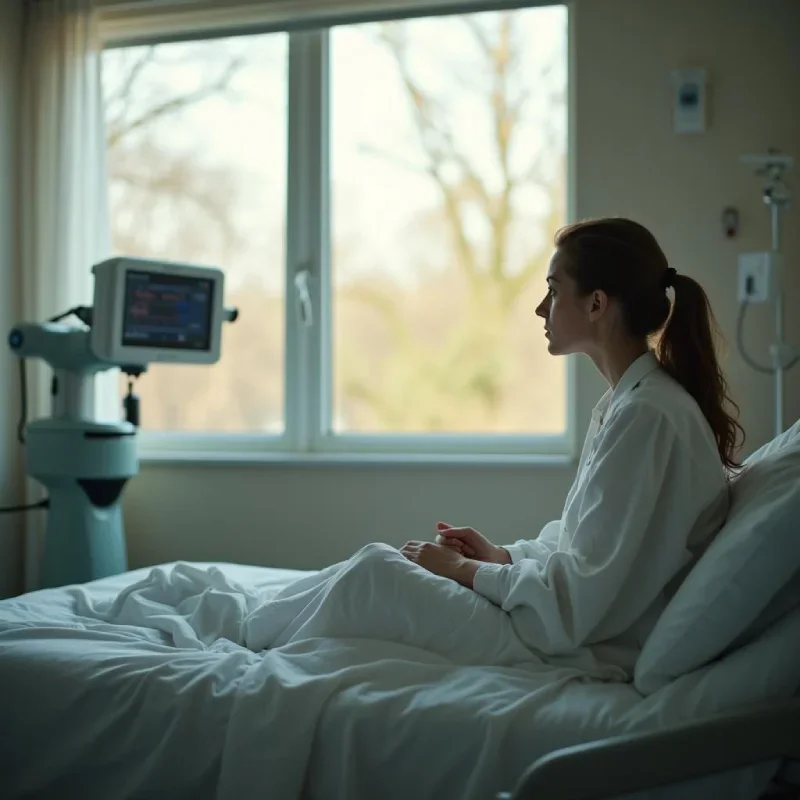
The first 48 hours are the most uncomfortable part of your recovery. You'll feel sore around the four to five small incision sites, experience some abdominal bloating from surgical gas, and need prescription pain medication to stay comfortable. Most patients stay overnight at Texas Health Huguley and go home the following morning.
Here's what surgery day actually looks like from your perspective. You'll arrive at the hospital, go through pre-op preparation, and be put under general anesthesia. You won't feel anything during the one-to-two-hour procedure. When you wake up in the recovery room, you'll feel groggy, sore, and possibly nauseous — all normal responses to anesthesia.
The incision sites on your lower abdomen will be covered with small adhesive strips (Steri-Strips) and possibly small bandages. The stitches beneath are dissolvable — no staples to remove later. Your abdomen will feel tight and bloated from the carbon dioxide gas used during laparoscopy.
This bloating can cause discomfort in your abdomen and sometimes referred pain in your shoulders (the gas irritates the diaphragm, which shares nerve pathways with the shoulders). The shoulder pain is temporary and usually resolves within 24-48 hours.
Dr. Neef provides a prescription for pain medication. The most important advice for these first two days: take your medication on schedule, not just when the pain gets bad. Staying ahead of the pain makes a significant difference in your comfort level. Most patients find that a combination of the prescribed medication plus a heating pad on the abdomen provides good relief.
Walking is important from day one — even if it's just shuffling to the bathroom and back. Early ambulation helps your body absorb the surgical gas faster, reduces bloating, prevents blood clots, and gets your digestive system moving again. You won't feel like jogging around the block. A slow walk down the hospital hallway or around your living room is perfect.
|
Day 1-2 Recovery |
What to Expect |
Practical Tips |
|
Pain |
Moderate soreness at incision sites |
Take pain meds on schedule, not just when hurting |
|
Bloating |
Swollen abdomen from CO2 gas |
Walk frequently — movement helps gas absorb faster |
|
Shoulder Pain |
Possible referred pain from diaphragm irritation |
Heating pad on shoulders, changes position frequently |
|
Energy |
Very low — fatigue from anesthesia |
Rest between short walks, sleep when your body asks |
|
Diet |
Start with clear liquids, progress to light food |
Avoid heavy or greasy food — gentle on your stomach |
|
Mobility |
Can walk with assistance |
Short, frequent walks trump one long walk |
Days 3-5: The Turning Point
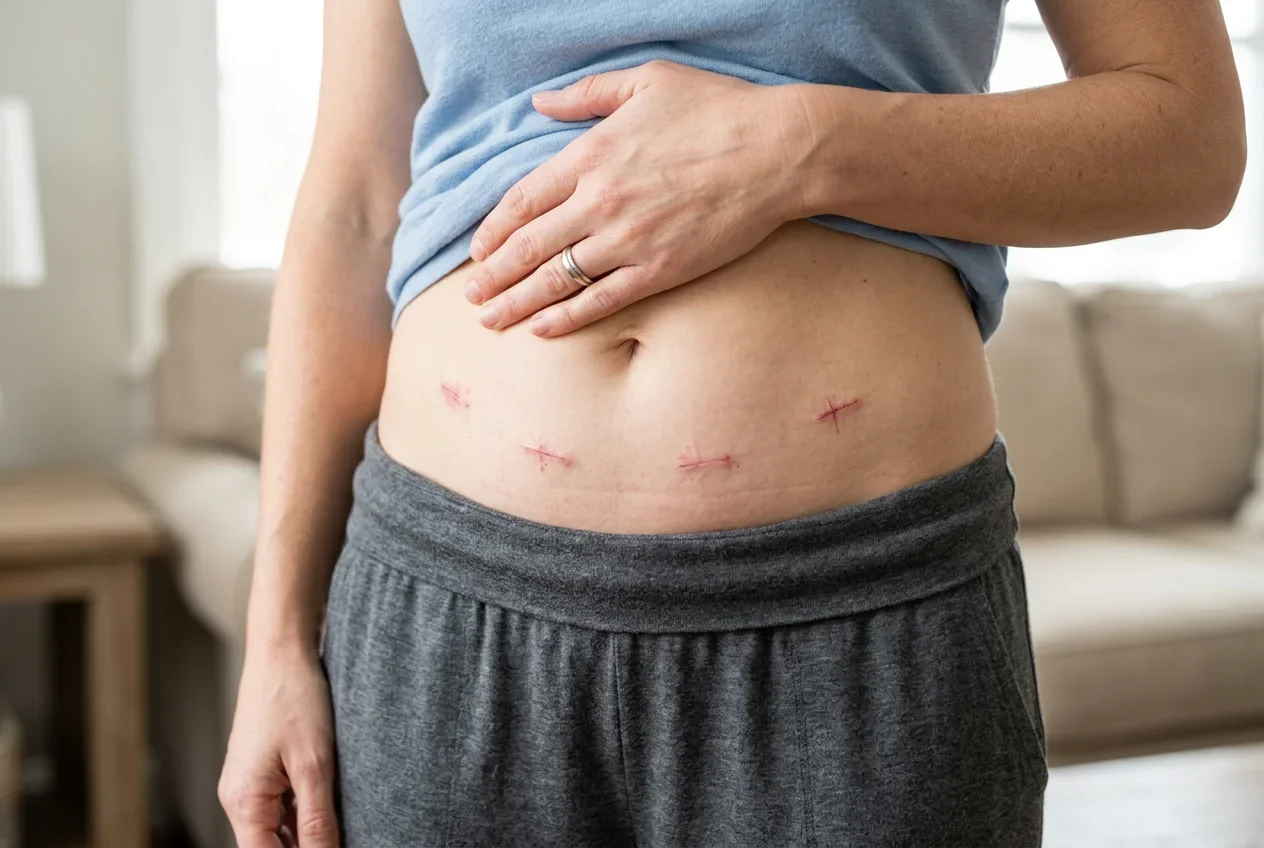
By day three, most patients notice a meaningful improvement. The bloating diminishes, pain decreases enough to transition from prescription medication to over-the-counter NSAIDs like ibuprofen, and energy begins returning. You can shower normally, eat regular meals, and move around the house without assistance.
This is the phase where recovery starts feeling productive rather than just endurable. The surgical gas has largely been absorbed, so the uncomfortable bloating and shoulder discomfort should be resolving. Your incision sites are healing — they may look slightly pink and feel tender to the touch, but the sharp post-surgical soreness is fading.
Most patients make the switch from prescription pain medication to ibuprofen (Motrin) or naproxen (Aleve) somewhere around day three. These NSAIDs are actually excellent for post-surgical pain because they reduce both pain and inflammation. Dr. Neef may recommend a specific dosing schedule — follow it for consistent relief. A heating pad continues to help with any residual abdominal tenderness.
Your daily activity level can increase noticeably during this phase. Showering is fine — let water run over the incision sites gently, but don't scrub them or soak in a bath. Light meal preparation, short walks around the house or neighborhood, and comfortable sitting activities (reading, watching TV, light computer use) are all appropriate. Many patients describe this phase as "moving slow but feeling human again."
What to avoid during days three through five: lifting anything heavier than a gallon of milk, bending repeatedly, straining during bowel movements (stool softeners help — ask Dr. Neef if he didn't prescribe one), driving, and any activity that engages your core muscles. Your body is healing internally even though the outside looks good.
|
Day 3-5 Activity Guide |
OK to Do |
Still Avoid |
|
Pain Management |
Switch to ibuprofen/naproxen if comfortable |
Don't skip doses — stay consistent |
|
Hygiene |
Shower gently, pat incisions dry |
Baths, pools, scrubbing incision sites |
|
Movement |
Walk 10-15 min, move around house freely |
Lifting over 8 lbs, bending, core exercises |
|
Food |
Normal meals, emphasize fiber and hydration |
Heavy/greasy foods, large portions |
|
Work |
Light phone calls, email from home |
Commuting, standing for extended periods |
|
Social |
Short visits, light conversation |
Outings, errands, driving |
Days 6-7 and Beyond: Back to (Most of) Your Life
By the end of the first week, most patients feel significantly recovered — managing only occasional mild discomfort, eating and sleeping normally, and handling light daily activities independently. Many patients return to desk work within the first week. The critical milestone: once Dr. Neef confirms healing at your follow-up, you can begin trying to conceive.
The one-week mark is the recovery milestone that separates the robotic approach from traditional open tubal ligation reversal surgery. At this point in an open surgery recovery, patients would still be dealing with significant incision pain, limited mobility, and weeks of remaining restrictions. With the robotic approach, most women are feeling close to their baseline.
By day six or seven, your incisions are healing well — the Steri-Strips may be starting to peel at the edges (let them fall off naturally, don't pull them). Soreness is minimal, usually just a mild tenderness if you press on the incision sites or twist the wrong way. Energy is returning to near-normal levels, though you may tire more easily than usual with extended activity.
Driving is typically fine once you're off prescription pain medication and can comfortably perform the motions needed: turning your head to check blind spots, pressing the brake hard in an emergency, and sitting with a seatbelt across your abdomen without discomfort. Most patients reach this point between days five and seven.
The question every tubal reversal patient wants answered: when can we start trying? There's no mandatory extended waiting period after robotic tubes untied surgery. Once Dr. Neef evaluates your healing at your follow-up appointment — typically one to two weeks post-surgery — and confirms everything looks good, you can begin trying to conceive through regular intercourse. Many couples start within two to four weeks of surgery.
After clearance, conception happens naturally. No medications, no clinic visits, no per-cycle fees. Your restored fallopian tubes allow eggs to travel from the ovaries to meet sperm in the tube, and then continue to the uterus for implantation — just as nature intended. Regular intercourse during your fertile window each month gives you the best chance of success.
|
Week 1+ Milestones |
Typical Timeline |
Notes |
|
Off prescription pain meds |
Day 2-3 |
Most transition to OTC NSAIDs |
|
Showering normally |
Day 2-3 |
Avoid baths until follow-up clearance |
|
Light household activities |
Day 4-5 |
No heavy lifting or bending |
|
Driving |
Day 5-7 |
Must be off prescription pain meds first |
|
Return to desk work |
Day 5-7 |
Physical labor jobs need 2 weeks |
|
Follow-up appointment |
Week 1-2 |
Dr. Neef evaluates healing |
|
Cleared to try conceiving |
Week 2-4 |
After follow-up confirms healing |
|
Full activity clearance |
Week 2-3 |
Including exercise and intimacy |
Key Takeaways
Days 1-2 are the toughest — manage pain proactively on schedule, walk from day one to reduce bloating, and arrange for help at home.
Days 3-5 are the turning point — transition to OTC pain medication, shower normally, and resume light daily activities at home.
By day 6-7 most patients feel near-normal — driving, light work, and independent daily living are typically possible by the end of the first week.
Trying to conceive can begin within 2-4 weeks after Dr. Neef confirms proper healing at your follow-up appointment — no extended waiting period.
Compare this to open surgery recovery of 4-6 weeks — the robotic approach returns you to life (and to trying for a baby) roughly three to four times faster.
Once cleared, conception is natural — regular intercourse during your fertile window each month, no medications or clinic visits needed.
.Tips That Make Recovery Easier: Advice from Patients Who've Been Through It

Practical preparation before surgery makes recovery significantly smoother. Stock your home with easy meals, set up a comfortable recovery station, arrange childcare and household help, and have your medications and supplies ready before you go to the hospital.
The women who have the easiest recoveries are almost always the ones who prepared in advance. Here's what patients consistently say made the biggest difference.
Prepare your home before surgery day. Stock your fridge with easy meals and snacks — soups, crackers, fruit, yogurt, and plenty of water bottles. Set up a "recovery station" on your couch or in bed: pillows for propping, a heating pad, your phone and charger, the TV remote, books, and a small basket with medications, lip balm, and tissues within arm's reach. Put anything you'll need during recovery at waist height — no reaching overhead or bending to the floor.
If you have kids, arrange childcare for at least the first three to four days. You won't be able to lift young children or keep up with their energy level. Having a partner, family member, or friend handle kid duties gives you the space to actually rest. Pets are fine — they'll probably curl up next to you and make excellent recovery companions.
Loose, comfortable clothing is essential. Anything with a waistband that sits near your incision sites will be uncomfortable. Loose pajama pants, soft shorts, or oversized t-shirt dresses are what most patients live in for the first week. Buy a pair of high-waisted underwear that sits above the incision area if you don't already own some.
Questions about your upcoming tubal reversal recovery? We're here to help. Contact Dr. Neef's team in Burleson to discuss your procedure and recovery plan.
Call (817) 568-8731Categories:

Frequently Asked Questions
-
Significantly less painful. The four to five incisions are only 5-12mm each, versus a 4-6 inch abdominal cut for open surgery. Most patients manage pain with over-the-counter medication by day three and describe the discomfort as "sore" rather than "painful."
-
Not until Dr. Neef clears you at your follow-up appointment. Showering is fine from day two or three, but avoid submerging your incisions in bath water, pools, or hot tubs until healing is confirmed.
-
Avoid lifting anything over 8-10 pounds for the first week, and nothing over 15 pounds until cleared at follow-up. For young children, have them climb up to you on the couch rather than picking them up from the floor.
-
Yes — this is caused by the CO2 gas used during laparoscopy irritating the diaphragm. It typically resolves within 24-48 hours. Walking and changing positions helps, along with a heating pad on the shoulders.
-
High-fiber foods (fruits, vegetables, whole grains), lean proteins, and plenty of fluids. Constipation is common after anesthesia and pain medications — fiber and hydration are your best defenses. Avoid heavy, greasy, or gas-producing foods in the first few days.
-
The external incisions typically close within one to two weeks. The Steri-Strips fall off on their own around day 7-10. Internal healing takes longer — the fallopian tube reconnection sites continue strengthening over several weeks, which is why follow-up and gradual return to activity are important.
-
Walking is encouraged from day one. Formal exercise should wait until Dr. Neef clears you at follow-up, typically around week two. Start with gentle activity and build back up gradually — your core muscles haven't been active during recovery.
-
A small amount of vaginal spotting is normal after pelvic surgery and may continue for a few days. Heavy bleeding (soaking a pad per hour) or bright red blood should be reported to Dr. Neef's office immediately.
-
Dr. Neef evaluates tubal patency during the surgery itself. A successful reversal means the tubes are reconnected and open. Your follow-up confirms healing is progressing well. The ultimate confirmation: achieving pregnancy through natural conception.
-
Some patients conceive within the first one to two months after being cleared to try. However, it's important to have realistic expectations — the average time to conception varies, and multiple months of trying is completely normal. Patience and consistent timing during your fertile window give you the best odds.